Periodontal disease
The jawbone contains alveolar sockets in which the teeth are placed. The tooth cement is connected to the alveolar bone by periodontal fibers. The jawbone is covered by the gingiva (gums), and together these structures are called the periodontium.

 Consultations and diagnostics
 Fast results
 Modern materials
 Top hygiene standards

Causes of periodontal disease
Gum deterioration can begin at an early age. As the condition progresses, it develops into periodontal disease caused by dental plaque made up of microorganisms. Dental plaque is a colorless, soft deposit that cannot be removed by rinsing. Without proper oral hygiene, minerals accumulate in plaque, leading to demineralization and the formation of tartar.
Tartar forms as hard deposits along the gum line. It causes gum inflammation by mechanically pressing on the gums and disrupting circulation, which leads to redness and swelling. It also prevents natural self-cleaning and proper oral hygiene.
If gingivitis is not treated in time, inflammation spreads and leads to the destruction of the periodontium. Periodontal pockets may form, representing the space between the tooth root and inflamed gums. These are often the first signs of periodontal disease. Teeth may become sensitive to thermal and mechanical stimuli. Advanced stages can lead to periodontal abscesses, which may affect overall health. Teeth may become loose and eventually fall out.
Poor or irregular oral hygiene and smoking significantly increase the risk of periodontal disease. Other contributing factors include conditions such as diabetes, as well as genetic predisposition.
How is periodontal disease treated?
Periodontal disease is usually painless until complications arise. Treatment may be conservative, surgical, prosthetic, or a combination of methods. Prevention is the best approach to keep the condition under control and prevent progression. Therapy is typically long-term, but in early stages, treatment is simple. Gingivitis does not require complex procedures, as periodontal pockets are minimal. Plaque and tartar are removed using ultrasonic devices.
After cleaning, teeth are polished using rubber cups and brushes, along with special pastes to fully remove deposits. If necessary, medication may be prescribed. Our specialists also recommend rinsing the mouth with special solutions after treatment.
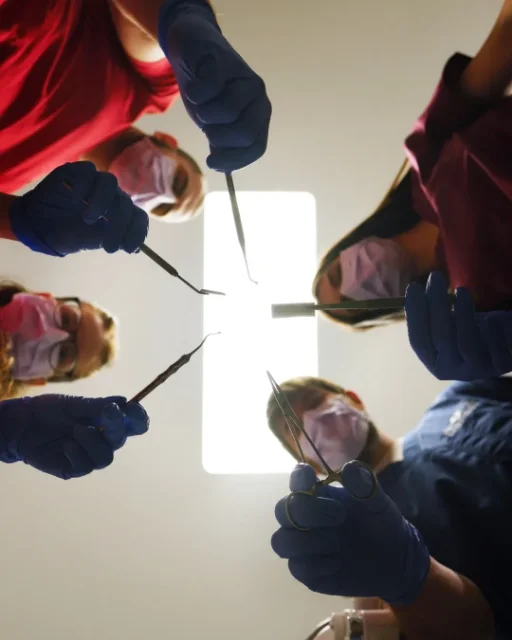
If periodontal pockets develop, they must be treated or reduced in time. Depending on their condition, they may be treated non-surgically or surgically. Surgical procedures remove infected tissue and are performed under local anesthesia, making them painless.
In cases of deep bone defects, surgical procedures may include bone grafting to restore lost tissue. After the procedure, the gums are sutured, and stitches are removed within about ten days. If one or more teeth are lost, prosthetic rehabilitation is performed.