Prosthetics
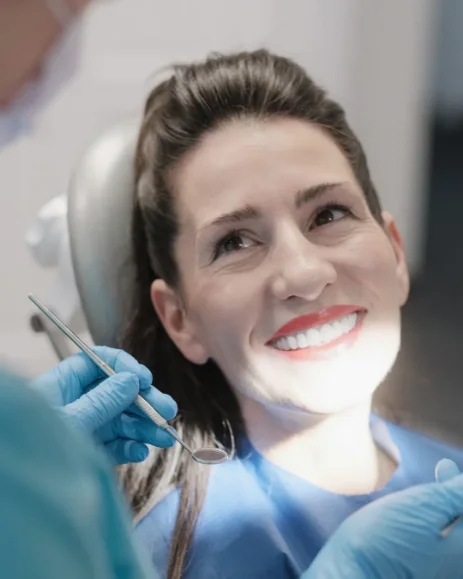
 Consultations and diagnostics
 Fast results
 Modern materials
 Top-level hygiene
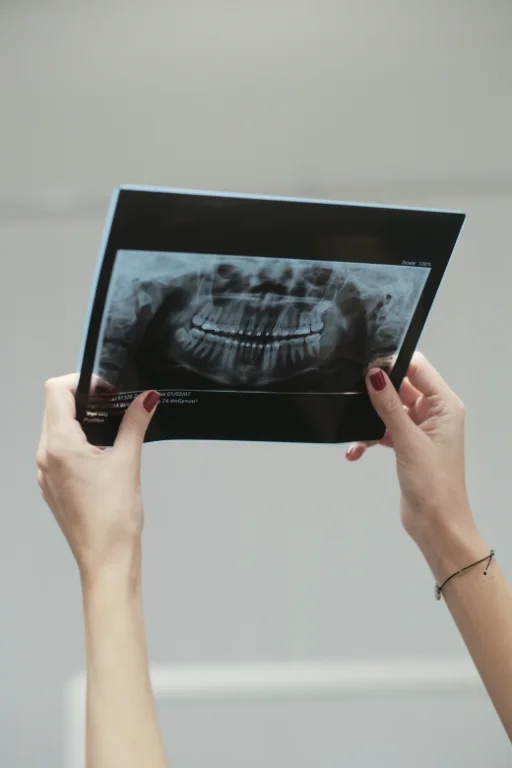
Tooth coverings – facets or veneers
Tooth coverings used to reshape teeth in various ways are called facets or veneers. Ceramic veneers cover numerous types of tooth discoloration that are resistant to whitening. They are also used to close gaps between teeth (diastemas), as well as to prevent tooth fracture and enamel loss. Teeth that have been discolored by tetracycline can be reshaped using veneers.
Reshaping, widening, lengthening, and changing the color of teeth does not require extensive drilling, which means patient comfort is not compromised. The term facet or veneer primarily refers to the ceramic veneer. In our country, the more cost-effective composite veneers are most commonly used — they are quicker to produce and more affordable than ceramic ones. These include composite veneers or prefabricated veneers that come ready-made; to cement them, only the appropriate color and size need to be selected.
Highly aesthetic ceramics allow light to refract vividly through ceramic veneers, making it easy to achieve the desired tooth color. The thickness of a veneer is just a fraction of a millimeter, and it is only after cementation that the tooth achieves its full aesthetic brilliance.
What are the advantages of ceramic veneers?
When comparing composite and ceramic veneers, the main advantage of ceramic veneers is their longevity and aesthetics. Composite tooth coverings change color over time, which is not the case with ceramic veneers. Ceramic veneers also have far superior optical properties. The production time differs between the two — composite veneers take less time to make, while ceramic tooth coverings require several visits to the dentist. When it comes to cost, specialists recommend ceramic veneers, as placing these tooth coverings is far more cost-effective in the long run.
Our dental practice offers a long-term solution for your teeth, so don't hesitate to contact us. For the radiant smile you have always wanted, get in touch with us.
Full and partial dentures
When you are missing several teeth in the jaw, partial and full dentures are a practical solution for replacing them. Dental dentures are also referred to as removable dental restorations, as the patient can remove them on their own in order to properly maintain oral hygiene. The choice of denture depends on how many teeth are missing and how many we wish to replace. Full and partial dental dentures are distinguished from one another.
Full dental denture
If you have no teeth remaining in your jaw, a full dental denture and dental implants are the only solution for replacing them. Removable restorations are placed over the lower and upper jawbone and are made from acrylic. If a full denture is crafted well, you will eat with ease, the denture will look completely natural in your jaw, and you will certainly regain your self-confidence. However, full dental dentures do have their drawbacks. Compared to other methods of tooth replacement, they are the least comfortable, and a longer adjustment period is needed. In some cases the denture may shift on the lower jaw, though this is not always the case. Nevertheless, despite the need to get used to a foreign object in the mouth, a full dental denture remains the best way to restore your smile and self-confidence.
Partial dental denture
When you are missing several teeth in the jaw and a bridge is not the right solution, a partial dental denture is the right choice for you. This denture is attached to the surrounding teeth using metal extensions and clasps to keep it stable and prevent it from shifting. There are two types of partial dental dentures:
- Skeletal (cast metal) – has a metal framework, shorter adjustment period, more comfortable, cast clasps, more stable
- Plate (acrylic) – less durable, made from acrylic